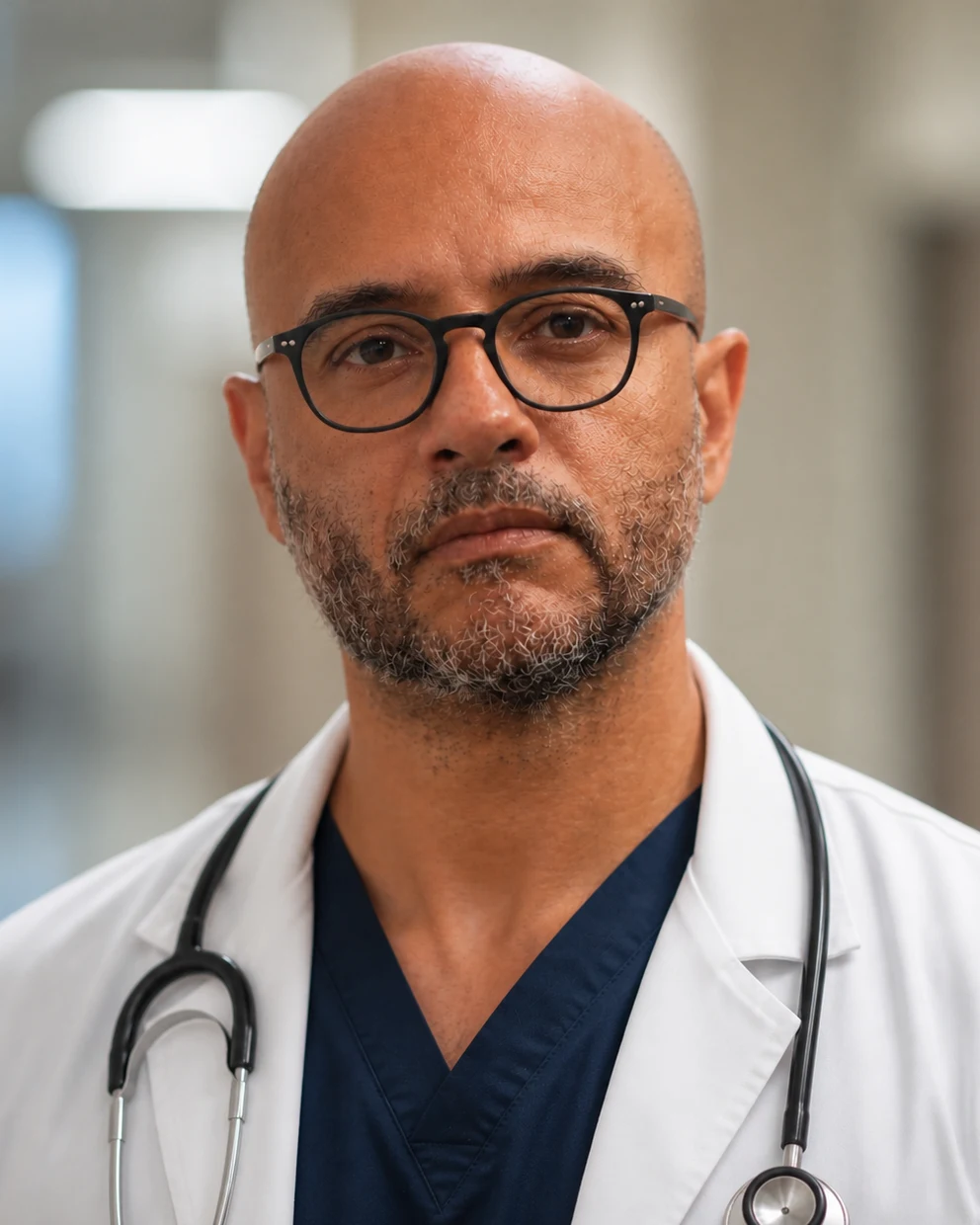
I teach the courses that decide it
Anatomy and Physiology I and II — BSC2085 and BSC2086 at Miami Dade College since 2014. These are the courses where pre-med plans quietly end, and I have watched it happen every single term for over a decade.
I also teach cadaver-based gross anatomy to practising healthcare professionals at the M.A.R.C. Institute in Doral, and I taught the same material to physician assistant students at South University through 2025.
That matters for a specific reason: when you tell me you are struggling in A&P, I do not have to take your word for where the problem is. I already know the four or five places students lose the thread, because I am the one standing in the room when they lose it.
I am not a physician, and I will never pretend otherwise. I am the person who teaches the science physicians are built on.
I have done the advising job officially
From 1996 to 2000 I was an academic advisor at Miami Dade College's New Student Center. Auditing transcripts. Mapping upper-division transfer requirements. Processing graduation approvals.
It is the least glamorous work in higher education and it taught me the thing I most want students to hear: the people who do not make it are usually not the least capable ones. They are the ones who found out about a requirement, a deadline, or a prerequisite sequence a semester too late.
In 2003 I taught medical terminology, gross anatomy and histology in a pre-matriculation programme at UMDNJ's School of Osteopathic Medicine — students who had been accepted and were about to start. Preparing people for year one is not a new business for me.
The students I have always worked for
From 1997 to 2000 I was Chairman of Minority Affairs for Florida International University's American Medical Student Association chapter — finding research placements and MCAT summer programmes for under-represented students and making sure they heard about them before the deadlines closed.
I had been through those programmes myself: the Minority Medical Education Program in Chicago, the University of Miami's health careers motivation programme. I was a National Medical Fellowship Scholar in 2002.
I still work in Spanish and English. In Miami that is not a nice extra — for a lot of families it is the difference between a conversation and a transaction.
Two attempts, neither finished
I hold a Master of Science in Biomedical Sciences from UMDNJ's Graduate School of Biomedical Sciences. I completed a year and a half of four at UMDNJ's School of Osteopathic Medicine and two years of four at the University of Medicine and Health Sciences in St. Kitts, and I sat for USMLE Step 1. I finished neither degree — what I hold is basic science medical training.
I could leave that off this page. I am telling you because it is the most useful thing I know that a consultant with a spotless record cannot tell you — I know what the attrition path looks like from inside it. I know how the semester feels before it goes wrong, and how useless general advice sounds when you are in it.
If you are frightened that you are not going to make it, you are not talking to someone who found this easy.
What I will and will not do
I will read your application honestly, tell you where you actually stand, and help you build a school list that reflects it. I will teach you the anatomy and physiology you are failing.
I will not guarantee you admission — nobody can, and anyone who does is selling you something. I will not write your personal statement. I will not give you medical advice; that is not what this is.